

How to Avoid Scheduling Employees for Clopening Shifts

Written By: Annie Troup
Last Updated March 25, 2026
Scheduling is an imperfect process. Even with the best intentions, your schedule might not come together as planned, leaving an employee working a dreaded “clopen” shift, where they close the store, office, or job site at night and are scheduled to turn around and open it again the next morning.
Managing shift-based workers requires balancing staffing needs with employee requests, preferences, and well-being, making issues like clopening difficult to avoid entirely.
In this article, we uncover what causes clopening schedules and how back-to-back shifts can affect your business operations and employee performance. We also share practical tips to prevent clopenings.
Why clopening happens
Clopening schedules are most common in the retail, hospitality, service, construction, and manufacturing industries, where complex shift-based schedules are required. Clopenings often occur as a result of external pressure to reach company goals, where managers attempt to cut labor costs or hit industry benchmarks with limited staff.
Inevitably, clopening patterns also develop from human error: staffing employees across numerous shifts and locations can be overwhelming and tedious, and frankly, a few mistakes are bound to make their way onto the final schedule.
Why you should avoid scheduling clopening shifts
Rather than writing schedules that look good on paper, are strictly “by the numbers,” or are based on whatever fits that week, it’s important to consider how certain shift patterns, like clopening, can impact your business.
What may seem like a convenient way to fill gaps in the schedule can quickly lead to wider staffing, operational, and even legal challenges.
Negative impacts of clopening schedules
Clopening shifts are more than just a mild inconvenience for your employees. They often leave workers without time to eat, hydrate, and sleep well before their next shift. Without proper time to rest and recover, even the most tenured and high-performing employees can be at risk; at best, they’re underperforming, and at worst, they can be more susceptible to workplace accidents.
Sara Cemin, Head of Customer Relations at Helio Cure, highlights where this can lead:
“Sleep deprivation mimics the cognitive impairment of alcohol consumption, and that makes it a massive compliance risk. Your team may begin to skip over the little steps […] because their brains are in a fog.”
Clopening schedules can therefore cause major problems in your daily operations, resulting in everything from late arrivals or no-shows for opening shifts to missed prep tasks, cash handling mistakes, and inventory errors.
And repeated clopenings can impact employee health, motivation, and workplace satisfaction, leading to poor customer service, safety violations, and high turnover. Worse yet, employees who are worn out and overwhelmed often share their bad experiences with others, which can damage your company’s reputation.
Sara continues: “It’s no wonder there is a drop in morale because there’s no amount of coffee that fixes resentment of a 15% decrease in cognitive function.”
Legal ramifications of clopening shifts
New laws and regulations are being introduced to help protect employees and businesses from poor scheduling practices like clopening.
One example is predictive scheduling, also known as fair workweek laws, which requires employers to give employees advance notice of schedules, predictable pay, adequate rest periods, and fair access to available hours.
Cities like Los Angeles, Chicago, and Seattle require employee consent if there’s less than 10 hours of rest between shifts, and they allow employees to decline clopening shifts without fear of retaliation.
Employees are typically compensated for these situations, either with a higher pay rate for hours worked during the required rest period or with a one-time bonus in the form of predictability or compensatory pay.
The table below highlights existing right-to-rest laws in the United States, including the minimum hours of rest required between shifts and associated shift pay adjustments.
| Location | Minimum hours between shifts | Shift pay adjustment |
|---|---|---|
| State of Oregon | 10 hours | Time-and-a-half |
| Berkeley, CA | 11 hours | Time-and-a-half |
| Emeryville, CA | 11 hours | Time-and-a-half |
| Los Angeles, CA | 10 hours | Time-and-a-half |
| Los Angeles County, CA | 10 hours | Time-and-a-half |
| Chicago, IL | 10 hours | 1.25 times regular pay |
| Evanston, IL | 11 hours | Time-and-a-half |
| New York City, NY | Back-to-back shifts | $100 predictability pay |
| Philadelphia, PA | 9 hours | $40 compensatory pay |
| Seattle, WA | 10 hours | Time-and-a-half |
Employers who don’t follow these laws could face fines, legal action, or more serious consequences, depending on the violation.
The 5 best ways to avoid clopenings
Preventing clopening shifts may seem daunting, but adjusting your scheduling habits can significantly reduce or even eliminate them.
1. Set clear rules and expectations about clopening with staff
First, you should establish clear company rules that dictate the minimum rest period between shifts. The policy you create doesn’t need to be complex; in fact, it’s usually better if it’s straightforward.
Jeff Patten, Co-Founder and Wine Industry Expert at Flatiron Wines & Spirits, notes:
“I use a very simple rule to prevent clopenings: no worker can perform a closing shift and then an opening shift with less than 11 hours off. After 20 years at Flatiron Wines, this is the rule that keeps teams together. When bar leaders rest, they linger around longer, and sales remain high even at busy times. The rule makes sense in helping the business to grow while keeping staff.”
When creating your policy on clopening shifts:
- Review your busiest shifts and staffing needs to determine a realistic minimum rest period — e.g., 10–11 hours.
- Align the policy with local labor laws and predictive scheduling regulations.
Once you’ve established your policy, communicate the rules to all employees in writing. The policy can be added as an addendum to employee handbooks and should be included in all future onboarding paperwork.
If these rules aren’t clearly outlined, managers may bend them during peak times, leaving employees under strain. By creating a simple policy that defines minimum rest periods between shifts, you ensure managers follow scheduling rules, employees know what to expect, and you have a safer working environment.
What’s more, when employees get enough rest, they’re less likely to call in sick, which keeps shifts fully staffed and projects running on schedule. Rica Gadi, CEO of New Options Worldwide, saw a “30% decrease in unplanned absences during a work week” after establishing a 12-hour rest rule.
2. Avoid copy-and-paste scheduling
One of the most common scheduling pitfalls is duplicating schedules.
Copying last week’s schedule may be quick and familiar, but any mistakes carry over to the new week. You might overlook rest time between shifts, staffing levels, or changes in worker availability. This practice can cause simple scheduling errors to develop into consistent patterns.
Staffing needs also change due to events, holidays, and seasonal fluctuations. As Jeff Patten observes, a common mistake is “copying the schedule from the previous week even though sales vary from week to week.”
To prevent clopening shifts, you don’t need to create an entirely new schedule each week, but we do suggest building in time to review the schedule before publishing. Jeffrey A. Hensel, a Broker Associate with North Coast Financial, Inc., finds that this step saves him time in the long run:
“I ensure that before anything is live, I audit [the schedule] at least once a week. It would save us weeks of drama and possible turnover expenses and takes me 15 minutes.”
The schedule audit can be quick, especially if you follow a checklist to ensure that certain priorities are met — specifically, preventing clopening by confirming employees have adequate time between shifts.
3. Ensure you have enough staff
Required staffing levels change over time, and if you’re not planning ahead, you may be forced to schedule clopening shifts to handle the increased workload.
As Laci Loew, Global HR Analyst and Consultant, explains, “effective workforce planning requires a clear view of existing talent and skills, forecasting future needs, and defining the gap between the two.”
You can put this concept into practice by assessing your staffing needs. This isn’t a one-and-done task, however; it should be a regular, ongoing process. To keep your schedules running smoothly, you should:
- Analyze trends: Identify which shifts are most often scheduled as clopenings to spot recurring issues, and examine schedules for repeated gaps to reveal positions or times needing additional coverage.
- Forecast demand: Use historical sales, reservations, or foot traffic to ensure sufficient coverage during busy times.
- Recruit staff proactively: Adjust staffing, add hours, or bring in temporary workers before finalizing the schedule to avoid forced clopening shifts.
- Review schedules regularly: Incorporate a weekly review to monitor potential clopenings and adjust staffing as needed.
Ensuring adequate staffing and shift coverage prevents managers from making panicked or last-minute scheduling decisions.
4. Cross-train employees for opening and closing shifts
Having enough staff on hand goes a long way toward preventing clopening shifts, but coverage alone isn’t always enough. When only a handful of employees are trained to handle opening and closing responsibilities, clopening shifts are far more likely to occur.
For example, if Sam and Bethany are the only employees trained to open and close, and Sam goes on vacation, a manager may be forced to assign Bethany a grueling week of clopening shifts until Sam returns.
Alternatively, by training multiple employees to handle opening and closing shifts, you can prevent overworking top performers and ensure responsibilities are shared fairly. Sara Cemin told Buddy Punch that she “finally realized that the only way to keep the system fair is to rotate duties.”
It may help to keep a clear list of who is trained for which shifts to simplify scheduling decisions. You should also record who has opened and closed recently so the rotation remains fair and predictable.
Cross-training more team members also gives managers the flexibility to schedule shifts efficiently throughout the year.
5. Create open communication and trust around scheduling
Employees often struggle to share their scheduling needs with their supervisors. Tsvetelina Nasteva, Talent Acquisition Specialist, explains that the reason is often fear of retaliation:
“Employees are hesitant to call attention to [clopening] situations because they want to avoid conflict with their manager and to safeguard their jobs. When the schedule is grueling, people worry that speaking up will make them sound difficult.”
To counter this, start by creating a 48-hour review window for the schedule. During this time, designate a one-on-one communication channel (not an open forum) for employees to raise concerns and share feedback about their shifts before they are published.
This practice can help to resolve problems early while increasing scheduling effectiveness. However, listening to your employees is only half the solution. If you don’t act on the scheduling feedback you receive from employees, you run the risk of losing their trust, as Tsvetelina explains:
“I also think a lot of managers underestimate [clopening] schedules because they don’t realize how much employees study them to glean what the company actually values. When someone gets a late close followed by an early open time, they learn that their rest is not a consideration. Over time, that frustration builds quietly. Reducing the overlap even by 20 percent is enough to have a good effect on team morale.”
Taking scheduling feedback seriously and making the necessary improvements can create a system in which employees feel supported and appreciated.
How technology can help you prevent clopenings
Even with good habits, human error can still cause clopening shifts to appear on your schedule. You can avoid this by using scheduling software. According to Tsvetelina Nasteva, scheduling platforms “make it much easier to identify clopenings or, even better, prompt managers to make changes to them before the [schedule] comes out.”
Below, we take a closer look at how you can use software to detect and prevent clopening before it happens.
Shift overlap management
Finalizing a schedule without reviewing it beforehand is a risky practice that can lead to clopening shifts. However, most managers don’t have time to review every shift in detail.
To streamline the process, employee scheduling software can quickly identify shift overlaps and confirm that employees have enough rest time between closing and opening shifts.
For example, Buddy Punch’s shift overlap notifications tell you when two scheduled shifts overlap, or when a shift is scheduled for an employee who is unavailable or has requested time off, making it a valuable tool for catching scheduling mistakes in real time.
If you receive a shift overlap notification, you can either return to the schedule to make changes or edit the schedule for the employee(s) listed directly in the error message.
Filtering by employee
When reviewing the entire schedule, even the most diligent managers can accidentally miss a scheduled clopening shift for the week.
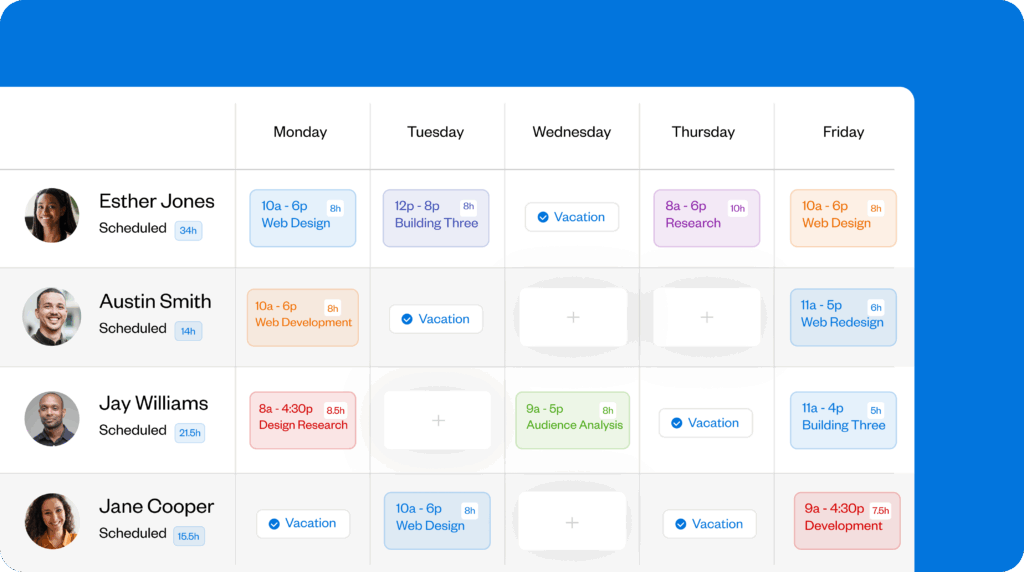
One way to address this is to check individual employee schedules after the master schedule is created. Many software systems, including Buddy Punch, let you filter by individual employees, making it much easier to spot patterns in an individual’s shifts.
For instance, you can zero in on employees who frequently work closing shifts or have heavy workloads to confirm that they have compliant breaks and aren’t being assigned regular clopenings.
Controlled shift swapping
Shift swapping is another potential cause of clopenings on the schedule. When employees request swaps at the last minute, managers might not have time to check whether the new schedule meets minimum rest-time requirements and may focus solely on ensuring the shift is covered.
Fortunately, scheduling software can help you manage shift trades more efficiently. With Buddy Punch, employees can submit swap requests via the platform, and managers can then review and approve them before the schedule updates. This allows managers to check whether the swap meets the required rest time policy (and any other requirements) before confirming the change.
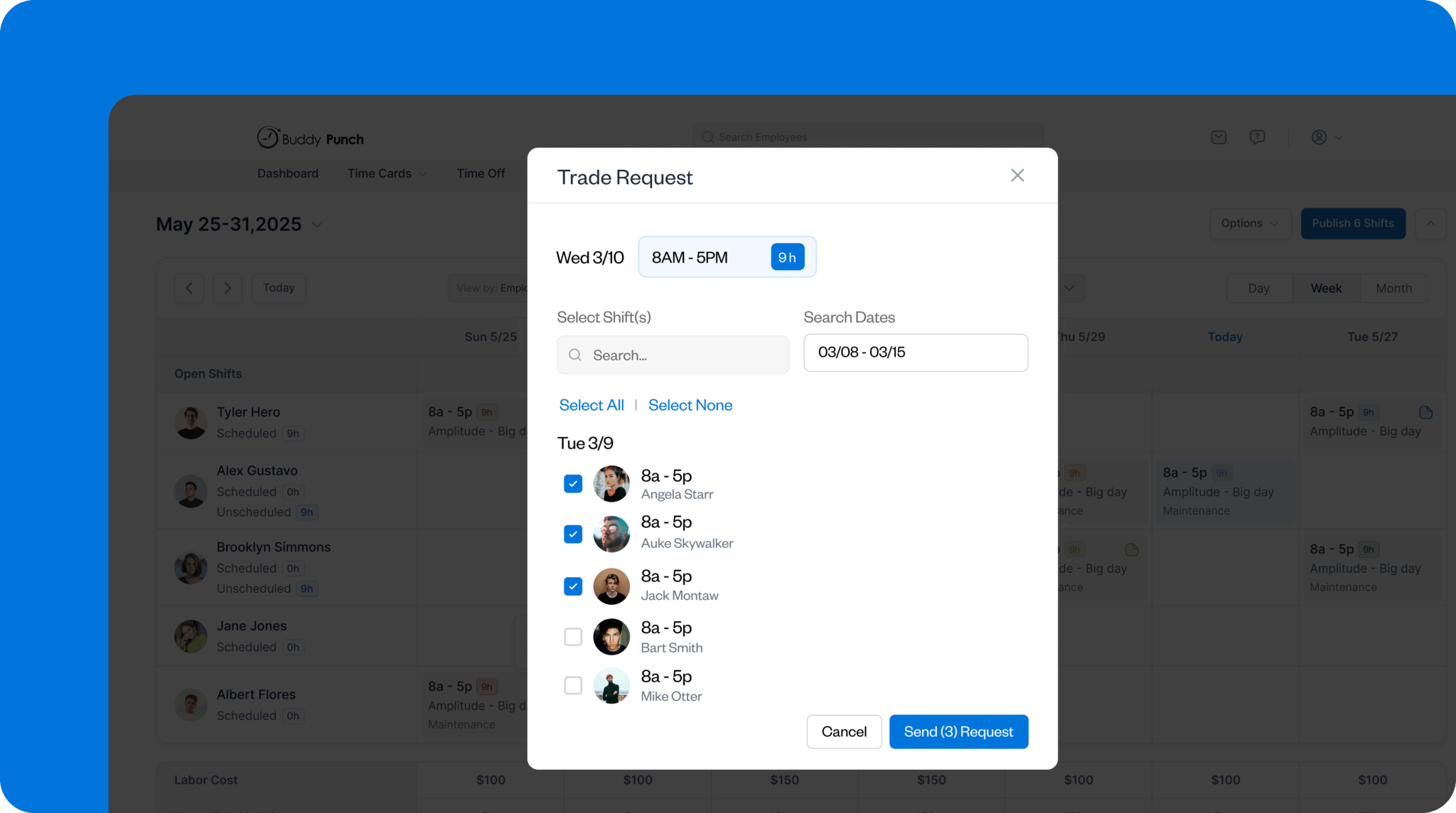
Managers can also customize permissions. For example, you can opt to prevent swaps entirely, require approval for all changes, or allow swaps freely while maintaining accountability. This flexibility ensures shifts are covered fairly and safely.
Before you hit “Publish”: A clopening risk checklist
No scheduling software is a magic solution that can solve all of your scheduling problems — and regardless of company policies, software rules, and employee buy-in, unexpected events and mistakes can still cause clopenings to make their way onto the weekly schedule.
Before publishing a schedule, check for the following clopening risks:
- Does any employee have less than 10 hours between shifts?
- Are high-performing employees repeatedly clopening?
- Are managers approving swaps that create clopenings?
- Is there a pattern by location?
Break the clopening cycle with Buddy Punch
Clopening shifts are an ongoing challenge for shift-based workers, but scheduling software like Buddy Punch can help you avoid them by improving schedule visibility and reducing errors with features like:
- Managing shift overlaps
- Filtering by employee
- Controlled shift swapping
By using Buddy Punch to detect overlapping shifts, enforce rest-period rules, and manage coverage, you can prevent clopenings — and build employee trust and a safer workplace at the same time.
Contributors
- Sara Cemin, Helio Cure, Head of Customer Relations
- Jeff Patten, Flatiron Wines & Spirits, Co-Founder and Wine Industry Expert
- Rica Gadi, New Options Worldwide, CEO
- Jeffrey A. Hensel, North Coast Financial, Inc., Broker Associate
- Laci Loew, Executive Learning Exchange, Strategic Partner
- Tsvetelina Nasteva, Casinoreviews.net, Talent Acquisition Specialist

